Automated Guided Vehicles (AGV): Meaning, types, and the future of logistics

What is an Automated Guided Vehicle (AGV)?
An Automated Guided Vehicle (AGV) is a self‑propelled transport vehicle that moves materials inside factories, warehouses, hospitals, or distribution centers without a human driver. It uses navigation tools — such as magnets, wires, lasers, or sensors — to follow fixed or semi-fixed paths. AGVs carry pallets, racks, containers or other heavy loads.
Over time, AGV systems have evolved alongside advances in navigation and automation technology. Early AGVs often relied on magnetic strips or wires embedded in the floor. Modern systems may use laser guidance, visual sensors, natural‑feature navigation, or even fully integrated warehouse control systems that let the vehicles move with flexibility and coordination.
FlexQube’s AGVs track colored tape with onboard cameras. RFID tags beneath the tape steer them along the route and give obstacle warnings. With no changes to the fleet management system and a quick setup, you can start using your AGV within a day.
Types of Automated Guided Vehicles explained
Automated Guided Vehicles come in various forms, each built to handle specific material transport tasks and work environments. Below is a breakdown of the most common types.
What makes FlexQube AGV Systems unique
Most conventional AGVs come in standard, rigid sizes and often need major infrastructure upgrades, like installing magnetic strips in the floor, to function properly.
The FlexQube AGV System takes a different approach. It is designed to deliver the world’s most user-friendly automation solution for internal logistics. It uses a line-follow navigation system by following tape or a painted line. This makes the installation process quick and easy for operators to install, meaning that the AGV can be up and running in less than one day.
This high level of flexibility allows customers to customize their FlexQube AGV in a wide range of sizes and with tailored top structures to meet their specific requirements. They work seamlessly with any FlexQube cart or with your current fleet and facility layout.
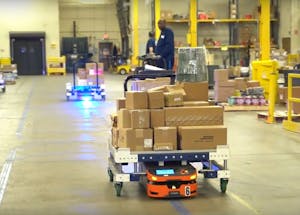
Unlike many AGVs that simply pull carts, the FlexQube AGV System offers much more versatility. It can:
- Carry a load directly on its own platform
- Tow larger material handling carts up to 4400 lbs
- Operate in a mother‑daughter configuration
- Easily be re-configured in design as needs change
- Work seamlessly without the need for wifi or infrastructure changes
This makes it a powerful solution for a wide range of handling tasks and workflows, adapting easily as operational needs change.
How industries are benefiting from AGV technology
Making workplaces safer and more efficient
AGVs take over repetitive, often risky tasks, like moving heavy loads or navigating busy areas, which helps reduce accidents on the floor. They follow their routes with precision and do not get tired or distracted, consistently getting the job done right. That leads to fewer mistakes, less damage, and a safer environment for everyone.
Simplifying warehouse and distribution work
In warehouses and distribution centers, AGVs cover the heavy lifting. They manage pallets, carts, and loads that workers once carried manually. This allows operators to focus on tasks that require human intellect and helps operations run reliably through high-volume periods.
Keeping production lines running smoothly
In manufacturing, timing is everything. AGVs help by delivering materials exactly when and where they are needed. They keep the flow going between workstations, carry parts to the line, and move finished products out, without waiting on a forklift or worker to be free. This keeps production on schedule and avoids slowdowns.
Implementing and optimizing your AGV system
Getting started with AGVs
Before introducing AGVs, assess your facility layout, material flow, and handling requirements. Evaluate which type of AGV suits your operations, whether you need simple carts, pallet movers, or heavy-duty transporters. Also consider how AGVs will integrate with your existing infrastructure and whether you need route flexibility or load versatility.
Next, choose a navigation method that fits your environment and workflow. For example, camera guidance for dynamic warehouse layouts, or magnetic tape for fixed paths.
Finally, plan the implementation carefully: define routes, set up a control system (if needed), and coordinate safety protocols, especially if the AGVs will operate alongside human workers.
Overcoming AGV challenges
AGV adoption comes with a few challenges. Depending on the navigation method, installation can require floor markings or reflectors, which may take time and planning. In some cases, changes in layout or flexible workflows may require reprogramming or even hardware adjustments.
To avoid downtime, maintenance schedules and battery charging must be carefully planned, and teams need training to monitor AGV operations and resolve issues. Some AGV setups can struggle in cluttered, fast-changing environments unless fitted with advanced sensors and guidance technology.
AGVs in the future of industry 4.0
As the industry moves deeper into the realm of smart factories and digitalized supply chains, AGVs are emerging as a major force. Modern AGV systems can connect to warehouse management systems (WMS), production scheduling software, and real‑time tracking tools, which paves the way for a more coordinated, automated material flow.
Advances in navigation – such as laser‑based, lidar‑equipped, or natural‑feature navigation – make AGVs more flexible and easier to deploy, even in facilities where layout changes now and then.
Frequently asked questions about AGVs
Up next
10 December 2025
AMRs in warehouses: Smarter logistics through automation
Warehouses today rely on AMRs (Autonomous Mobile Robots) to move materials more efficiently and reduce unnecessary manual handling. These robots use built-in navigation systems to travel through the facility on their own, safely avoiding obstacles and following planned routes. By taking over routine transport tasks, they help minimize downtime, reduce physical strain for workers, and free up time for the operators.

10 December 2025
Automated Guided Vehicle advantages: Benefits that reshape material handling
AGV systems keep materials moving without unnecessary stops or inconsistencies, using onboard sensors and guidance technologies such as line-following, cameras, or markers placed across the facility. Once set up, they transport materials automatically along pre-defined routes, following a line of tape, stop at programmed locations, and support the overall flow of production without the need for constant operator input.